
How Family of Origin Shapes Your Relationships
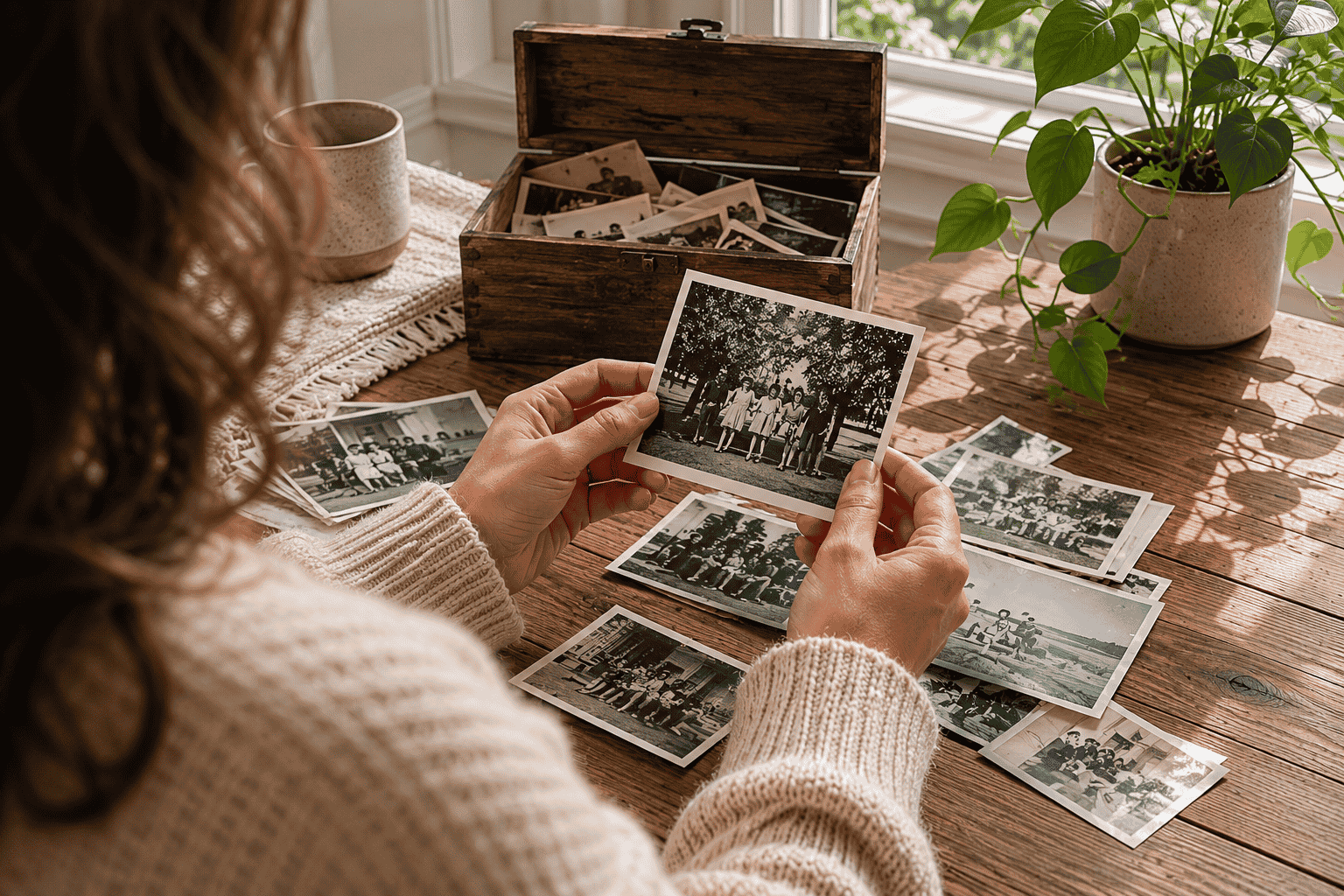
Have you ever wondered why certain relationship patterns keep showing up in your life?
The way you communicate, handle conflict, set boundaries, express emotions, and connect with others is influenced by many experiences, including the family environment you grew up in. This is known as your family of origin.
From an early age, we learn what relationships look like by watching the people around us. We learn how affection is expressed, how disagreements are handled, whether emotions feel welcome, and what it takes to feel accepted and loved. We also absorb unspoken messages about trust, vulnerability, independence, and emotional safety.
Many of these lessons stay with us into adulthood. They can influence how we choose partners, respond to conflict, ask for support, manage boundaries, and navigate closeness in relationships. Some patterns support healthy connection, while others can leave us feeling stuck in the same frustrating cycles.
To better understand how these early experiences continue to influence adult relationships, let's take a closer look at the ways family of origin shapes how we relate to ourselves and others.
What Is Family of Origin?
Family of origin refers to the family system you grew up in during childhood and adolescence. This includes parents, caregivers, siblings, and other family members who played an important role in your upbringing. It is not limited to biological relatives. Anyone who had a significant influence on your early experiences and relationships can be part of your family of origin.
Your family of origin is where you first learned about relationships. It shaped your early understanding of trust, communication, emotional expression, conflict, boundaries, and connection. The messages you received, both spoken and unspoken, helped form your expectations of how relationships work.
These early experiences can continue to affect the way you relate to others as an adult. They may affect how you communicate with a partner, respond to disagreements, express your needs, handle emotional closeness, and build trust in relationships.
This is why family of origin is often an important part of understanding recurring relationship patterns and emotional responses in adulthood.
The Concept of Attachment: Where It All Starts
One of the most important ways family of origin shapes your relationships is through attachment.
Attachment refers to the emotional bond that develops between a child and their caregivers. Through these early relationships, children begin to learn whether they can trust others, whether their needs will be met, and whether relationships feel safe and predictable.
These experiences often shape expectations that carry into adulthood. They can influence how comfortable you are with emotional closeness, how you respond to conflict, and how you navigate trust in relationships.
Researchers have identified four main attachment styles:
Secure Attachment
Secure attachment develops when caregivers are generally responsive, supportive, and emotionally available. Adults with secure attachment often feel comfortable with both closeness and independence. They are more likely to communicate openly, express their needs, and work through relationship challenges in healthy ways.
Anxious Attachment
Anxious attachment can develop when caregiving is inconsistent. At times a caregiver may be available and supportive, while at other times they may be emotionally distant or unpredictable.
As adults, people with anxious attachment may fear abandonment, seek frequent reassurance, become highly sensitive to changes in a partner's behavior, or worry about the stability of a relationship.
Avoidant Attachment
Avoidant attachment often develops when emotional needs are regularly dismissed, minimized, or discouraged.
Adults with avoidant attachment may value independence to the point where emotional closeness feels uncomfortable. They may struggle to open up, rely heavily on themselves, or pull away when relationships become more vulnerable.
Disorganized Attachment
Disorganized attachment is often associated with childhood experiences that felt frightening, chaotic, or highly unpredictable.
Adults with this attachment style may want close relationships while simultaneously feeling fearful of them. This can create confusing relationship patterns that involve both seeking connection and pulling away from it.
For some individuals, especially those who experienced ongoing childhood trauma or highly unpredictable caregiving, these attachment challenges can be more complex. You can learn more in our article on Complex PTSD Symptoms in Adults.
How Family of Origin Shapes Adult Relationships
Attachment is one piece of the picture, but it is not the only way family of origin shapes relationships. The roles you played, the messages you received about emotions, the way conflict was handled, and what you learned about love and boundaries can all influence how you relate to others as an adult.
The Roles You Were Given in Your Family
Many families develop unspoken roles that children naturally fall into. You may have been the responsible one, the peacemaker, the caretaker, the high achiever, or the child who tried to stay invisible to avoid conflict.
These roles can feel like personality traits, but they often begin as ways of adapting to the family environment. As adults, these patterns may continue to show up in relationships. Someone who was expected to take care of others may struggle to ask for help, while someone who learned to stay quiet may find it difficult to express their needs.
What You Learned About Emotions
Every family has its own set of rules around emotions, even if those rules are never spoken aloud.
In some families, emotions are welcomed and discussed openly. In others, feelings are dismissed, criticized, ignored, or avoided. Children quickly learn which emotions feel safe to express and which ones should be hidden.
These lessons often carry into adulthood. A person who grew up believing anger was dangerous may avoid conflict at all costs. Someone who learned that sadness made others uncomfortable may struggle to be vulnerable or ask for support when they need it most.
How Conflict Was Handled
The way conflict was managed in your family can strongly influence how you approach disagreements today.
If conflict was explosive, unpredictable, or emotionally unsafe, you may become anxious during disagreements or avoid them altogether. If family members rarely addressed problems directly, you may struggle to have difficult conversations even when they are necessary.
On the other hand, people who grew up seeing healthy conflict resolution often feel more comfortable expressing concerns, listening to different perspectives, and working through challenges without fearing the relationship will fall apart.
Boundaries and Personal Space
Healthy boundaries are usually learned through experience and example.
If your family respected privacy, personal choices, and emotional differences, boundaries may feel more natural. If boundaries were ignored, criticized, or viewed as selfish, setting limits as an adult can feel uncomfortable or even guilt-inducing.
This may show up as difficulty saying no, taking responsibility for other people's emotions, or feeling responsible for keeping everyone happy.
What Love Looked Like Growing Up
One of the most powerful influences of family of origin is the example it provides for love and connection.
Some people grow up in homes where love is expressed through affection, encouragement, and emotional support. Others experience love through acts of service, responsibility, and practical care. Some grow up in environments where love is mixed with criticism, unpredictability, control, or emotional distance.
As adults, we often gravitate toward relationship dynamics that feel familiar. What feels familiar is not always healthy, but it can feel comfortable because it reflects what we learned about love early in life.
Why We Often Repeat Familiar Relationship Patterns
One of the most common effects of family of origin is the tendency to repeat familiar relationship patterns in adulthood, even when those patterns are painful or unhealthy.
Many people assume they would naturally seek out relationships that feel healthy and supportive. In reality, people are often drawn to what feels familiar. If certain relationship dynamics were present throughout childhood, they can feel normal even when they create stress, disappointment, or emotional pain.
For example, someone who grew up around emotional distance may find themselves repeatedly drawn to unavailable partners. Someone raised in a highly critical environment may constantly seek approval from others. A person who learned that love had to be earned may continue to overextend themselves in relationships in an effort to feel valued.
By adulthood, many of these relationship expectations feel automatic. They can influence who feels attractive, what feels familiar, how conflict is handled, and what a person comes to expect from close relationships.
Patterns tend to lose some of their power once they become visible. When people understand where a relationship dynamic comes from, they have more room to decide whether it still serves them or whether it is time to approach relationships differently.
Family Patterns Often Get Passed Down Through Generations
Sometimes the relationship patterns we struggle with today have been part of a family for generations.
Your parents and caregivers were shaped by their own families, experiences, and challenges long before you were born. The way they handled emotions, conflict, affection, stress, and relationships was often influenced by what they learned growing up.
Research shows that attachment patterns can be passed from one generation to the next. A parent who struggled to feel emotionally safe, express vulnerability, or trust others may unintentionally pass some of those patterns on to their children. This does not mean they did not love their children. It simply reflects how early experiences can influence the way people relate to others throughout life.
Looking at family patterns through this lens is not about excusing harmful behavior or avoiding accountability. It is about gaining a fuller understanding of where certain dynamics may have come from.
For some individuals, cultural expectations, immigration experiences, family sacrifice, economic hardship, or generational trauma can add another layer to these relationship patterns. Looking at those broader influences can help explain why certain family patterns continue across generations.

Culture, Identity, and Family Expectations
Family relationships are shaped by more than individual personalities. Culture, religion, family values, immigration experiences, community expectations, and personal identity all help shape the messages people receive growing up.
For some people, family expectations around loyalty, achievement, caregiving, faith, or family reputation play a significant role in how they relate to others. These values can provide connection and belonging, but they can also create challenges when there is little room for personal boundaries, emotional expression, or individual differences.
For LGBTQIA+ individuals, neurodivergent people, first-generation individuals, and those navigating multiple cultural identities, family-of-origin work can be especially complex. It may involve honoring important family values while also creating space for authenticity, self-expression, and healthier relationship patterns.
Signs Your Family of Origin May Still Be Influencing Your Relationships
Family-of-origin patterns are not always obvious. Many people assume their reactions, relationship habits, and emotional responses are simply part of their personality. In reality, some of these patterns may have roots in early family experiences.
The influence of family of origin can show up in romantic relationships, friendships, family relationships, and even professional settings. While everyone's experience is different, some patterns appear so consistently that they often point back to early family experiences.
You may notice family-of-origin influences if:
You struggle to set and maintain boundaries.
You feel responsible for other people's emotions.
You avoid conflict or become highly anxious during disagreements.
You have difficulty trusting others.
You repeatedly find yourself in similar relationship dynamics.
You fear rejection or abandonment.
You have a hard time asking for help or expressing your needs.
You feel guilty when prioritizing yourself.
You tend to choose partners who share similar traits or behaviors.
You become emotionally withdrawn when relationships become vulnerable.
Seeing yourself in one or more of these examples does not necessarily mean something is wrong. Most people carry relationship lessons from childhood into adulthood in some form.
The goal is not to blame yourself or your family. The goal is to recognize patterns that may no longer be serving you and to understand how they continue to influence your relationships today.
Can Family of Origin Patterns Change?
Family-of-origin patterns can feel deeply ingrained because many of them were learned early in life and reinforced for years. They often become automatic ways of thinking, feeling, and relating to others.
The fact that a pattern developed in childhood does not mean it has to remain unchanged forever. People continue to learn and adapt throughout their lives. New relationship experiences, healthier boundaries, greater self-awareness, and therapy can all reshape how someone relates to themselves and others.
Change often begins with recognizing a pattern rather than automatically acting on it. A person who tends to avoid conflict may learn to have difficult conversations more directly. Someone who struggles with boundaries may become more comfortable expressing their needs. A person who constantly seeks approval may begin developing a stronger sense of self-worth that is less dependent on other people's opinions.
This process is not about becoming a completely different person. More often, it involves understanding where certain patterns came from and deciding which ones still fit the life and relationships you want today.
When to Consider Therapy for Family of Origin Work
There is no specific threshold someone has to reach before therapy becomes worthwhile. Many people explore family-of-origin issues simply because they want a better understanding of themselves and their relationships.
Therapy may be worth considering if you notice:
Relationship patterns that continue to repeat despite your efforts to change them.
A persistent feeling of not being fully understood or connected in close relationships.
Difficulty with trust, vulnerability, or emotional intimacy.
Strong emotional reactions that seem larger than the situation itself.
Ongoing struggles with boundaries, people-pleasing, or conflict.
A sense that your early experiences continue to influence your relationships in ways you don't fully understand.
At Brave Soul Therapy, we provide trauma-informed therapy for adults and teens throughout California. Our therapists help clients explore family dynamics, attachment patterns, relationship challenges, identity development, grief, anxiety, and life transitions with curiosity and compassion.
Family-of-origin work is not about blaming parents or staying focused on the past. It is about understanding how early experiences shaped the way you relate to yourself and others, and deciding what you want to carry forward from here.
Final Thoughts
Family of origin is only one part of your story, but it is often an important one. The relationship patterns, beliefs, and expectations learned early in life can continue to influence how you connect with others long into adulthood.
The goal is not to analyze every detail of your childhood. It is to recognize the relationship patterns that still show up today and decide which ones deserve a place in your life going forward.